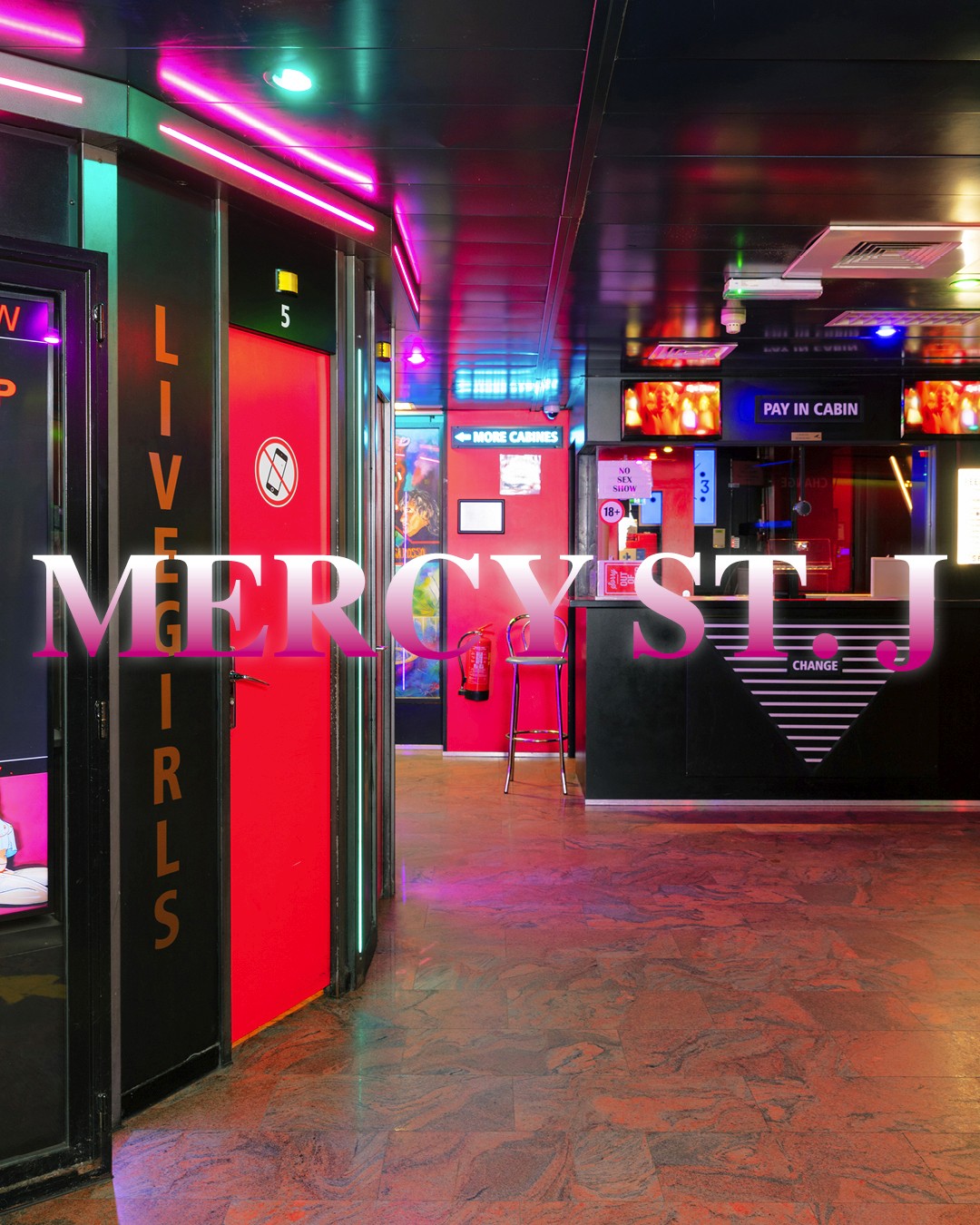
Sex Palace
Mercy St. J
Opening hours:
09:50 - 21:50
Address:
Oudezijds Achterburgwal 106
Kneel at the altar of the whores & take reverence! Altar to St. Anne is a living memorial to disappeared sex work spaces in the Red Light District. The work honors places where sex workers lived and worked, and recognizes sex work as a spiritual, social, and economic practice. Its altar form invites remembrance, blessing, and collective memory.
The work references the St. Anne’s Quarter, an area that has been almost entirely stripped of window prostitution through municipal policy and gentrification. In response to this erasure, the project creates a space of care and encounter, where sex workers and queer and trans* communities reclaim their history and assert their future.

Mercy St. J (they/them) is an Amsterdam and Berlin-based sex worker, dominatrix, writer, photographer, and community organizer. In their work, whoring represents not only labor but also a creative practice and a political tool: a way to play with power, shame, and desire, while simultaneously questioning systems that regulate and marginalize queer, trans*, and sex-working people.
St. J is the founder of Full Service Productions, a sex-worker-run production organization in Amsterdam and Berlin, conceived as a living homage to the poetry and politics of queer and trans* whores. Together with Freyja Boo, St. J organizes projects that center sex workers as creators and cultural actors, including a cabaret series featuring queer sex workers at the Casa Rosso Theatre in the Red Light District.
About Location
Since the 1970s, Sex Palace, like Casa Rosso and the Bananenbar, part of the Jan Otten Group, has been at the heart of the conversation about Amsterdam's city center and its sex and nightlife culture. Founder Jan Otten was not an outsider in that debate, but a participant in an ongoing urban dialogue in which freedom and regulation, emancipation and vulnerability, tolerance and nuisance are constantly weighed against each other.
This involvement continues today under the leadership of Dylan Meijer, who brings a remarkably diverse perspective as the group's director, a practicing physician, and a city council member. Initiatives like the Sexy Loo, which arose after a call from then-mayor Van der Laan to solve the shortage of public restrooms in the Red Light District, demonstrate how the Jan Otten Group also engages practically in urban issues. The fact that the Warmoes Biennial takes place against the backdrop of a new chapter in this story underscores how these places and people remain part of an ongoing dialogue about the future of the city center.